Weight Loss That Actually Makes Sense
A dietitian’s guide to feeling better, not just eating less
Let’s clear something up right away: weight loss isn’t about punishment, perfection, or cutting out everything you love. You're supposed to enjoy your meals. It’s about understanding how your body works and making choices that support it consistently.
When weight loss is approached with good nutrition, smart habits, and a little patience, it becomes far more sustainable and a lot less stressful. Let’s break down what actually matters.
⸻
Calorie Deficit: The Non-Negotiable (But Not the Enemy)
Weight loss happens when your body uses more energy than it takes in. This is called a calorie deficit, and it’s the foundation of fat loss.
Now before you picture tiny portions and constant hunger, take a breath. A calorie deficit doesn’t mean starving. It simply means being more intentional with food choices so your body gently taps into stored energy over time.
The sweet spot is a moderate deficit. This supports fat loss while keeping your metabolism, hormones, and energy levels happy. Slow and steady really does win this race.
⸻
Exercise: Think Support, Not Compensation
Exercise is amazing, but not because it “earns” you food.
Movement helps:
• Improve insulin sensitivity
• Preserve muscle while losing fat
• Support mood, stress, and sleep
• Maintain weight loss long term
You don’t need extreme workouts. Walking, resistance training, yoga, cycling, swimming — it all counts. The best exercise is the one you’ll actually do consistently. Your body doesn’t care about trends; it cares about movement.
⸻
A Balanced Diet: Feed Your Body, Don’t Confuse It
Calories matter, but food quality matters just as much.
A balanced diet helps regulate appetite, blood sugar, and energy levels, making weight loss feel easier instead of forced.
Focus on:
• Protein to keep you full and protect muscle
• Fiber from vegetables, fruits, legumes, and whole grains
• Healthy fats for satisfaction and hormone support
When meals are balanced, cravings tend to calm down. That’s not willpower — that’s physiology doing its job.
⸻
Blood Sugar Management: The Secret to Fewer Cravings
If you’ve ever felt “hangry,” that’s blood sugar talking.
Meals high in refined carbs and sugar can cause spikes followed by crashes, leading to stronger hunger and cravings. Pairing carbohydrates with protein, fiber, and fat slows digestion and keeps blood sugar more stable.
Stable blood sugar often means:
• Better appetite control
• Fewer energy crashes
• Less grazing between meals
This is one of the most underrated tools in weight loss.
⸻
Being Selective About Ingredients (Without Obsessing)
You don’t need to eat perfectly, but being selective helps.
Ultra-processed foods are designed to be easy to overeat and low in satiety. Choosing whole or minimally processed foods more often naturally supports a calorie deficit without constant tracking.
Simple rule of thumb:
If your great-grandmother wouldn’t recognize most of the ingredients, maybe don’t make it a daily staple.
⸻
Intermittent Fasting: A Tool, Not a Rule
Intermittent fasting works for some people and not for others. And that’s okay.
It can help reduce overall calorie intake and improve insulin sensitivity for some, especially those who prefer fewer meals. For others, it increases stress or leads to overeating later.
There is no bonus prize for fasting longer. If it fits your lifestyle and feels good, it can be helpful. If not, you’re not doing anything wrong.
⸻
Healthy Substitutions: Small Changes, Big Impact
Weight loss doesn’t require a full kitchen makeover.
Small swaps add up:
• Sugary drinks → water or unsweetened tea
• Refined grains → whole grains
• Processed snacks → fiber-rich options
These changes quietly lower calorie intake while improving nutrition, which is exactly what we want.
⸻
Your Gut Microbiome: Your Hidden Metabolic Ally
Your gut bacteria influence digestion, inflammation, and even how efficiently you extract energy from food.
A healthy gut microbiome is supported by:
• Fiber-rich plant foods
• Variety in the diet
• Fermented foods
While gut health alone won’t cause weight loss, it creates a metabolic environment that supports it. Think of it as setting the stage so your body can do its thing more smoothly.
⸻
Takeaway: Weight Loss Without the Drama
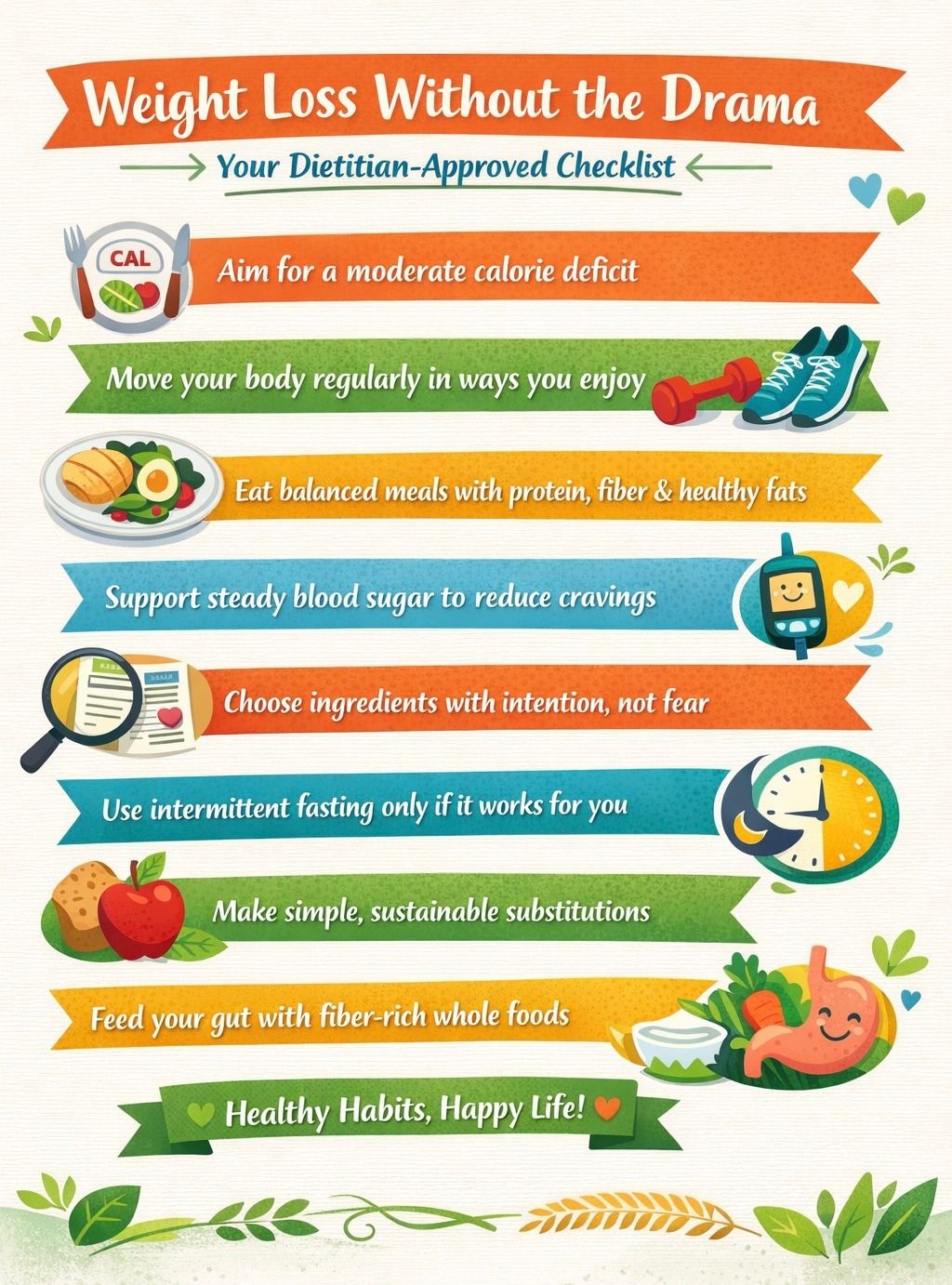
Here’s your dietitian-approved checklist:
• Aim for a moderate calorie deficit
• Move your body regularly in ways you enjoy
• Eat balanced meals with protein, fiber, and healthy fats
• Support steady blood sugar to reduce cravings
• Choose ingredients with intention, not fear
• Use intermittent fasting only if it works for you
• Make simple, sustainable substitutions
• Feed your gut with fiber-rich whole foods
Weight loss doesn’t have to feel like a battle. When your body is supported, informed choices start to feel natural — and progress becomes something you can actually maintain.